


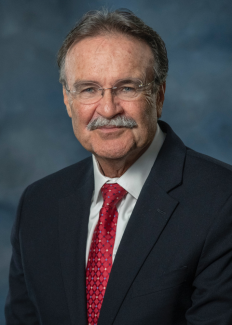
Ben R. Wagner was sworn in as Inspector General of the Tennessee Valley Authority (TVA) on June 6, 2022, following confirmation by the United States Senate.
Ben Wagner's professional career with TVA spanned 38 years of dedicated service. The majority of his career included 31 years of service to the Office of the Inspector General (OIG) at TVA. Prior to his retirement in 2017, he served in several senior executive positions in the TVA OIG including the role of Senior Advisor, Stakeholder Relations and Deputy Inspector General where he led the audits, evaluations, investigations, and administrative functions. In addition to these senior executive roles, Wagner held several leadership positions in the audits, evaluations, and administrative functions with the TVA OIG and was integral to the start-up of the office after it was established at TVA in 1985. In the seven years before joining the TVA OIG, Wagner also held various management and staff positions in TVA, primarily in the nuclear power program. Prior to that, he served as a state auditor for the State of Tennessee.
Wagner was born in New Mexico, but has resided in the Tennessee Valley region for the majority of his life, receiving his bachelor's degree in accounting from the University of Tennessee.
MESSAGE FROM THE INSPECTOR GENERAL BEN WAGNER
I am pleased to present our report for the period October 1, 2025, to March 31, 2026. In our semiannual report feature, we discuss the Tennessee Valley Authority's (TVA) role and challenges in Energizing the Valley’s and America’s Future. TVA is positioned to play an integral role in supporting and advancing the goals of President Donald Trump’s Administration through partnerships for development of new nuclear technologies. Also, in February, the TVA Board of Directors (TVA Board) announced its intent to extend the life of Cumberland and Kingston fossil plants, keeping more than 3,700 megawatts of needed generation.
TVA continues to pursue the largest capital investment in history for new generation, transmission upgrades, and life extensions of current generating assets. Moving forward will require navigating significant challenges such as TVA’s debt ceiling cap, which could impact TVA’s ability to pay for the new generation resources or cause TVA to use alternative financing—potentially raising the cost for ratepayers. Additionally, TVA will continue to face both competition for talent and expertise as other utilities are also building new generation, and continuing supply chain challenges which have significantly lengthened the lead time for equipment and increased costs.
In this semiannual period, our audit, evaluation, and investigative activities identified more than $41.7 million in questioned costs, recoveries, fees, and savings; and opportunities for TVA to improve its programs and operations. Below are highlights of our work this period.
- In fiscal year (FY) 2025, TVA spent about $6.8 billion on contracts primarily for labor, services, materials, and equipment. Our Contract Audits group audits these contracts to identify recovery opportunities and improve contract administration. During this period, we completed five contract compliance audits with approved expenditures totaling $763 million and identified potential overbillings and excessive payments of almost $34.4 million. The Occupational Safety and Health Administration states that establishing a safety and health program is one of the most effective ways of protecting workers. Due to the importance of the health and safety of personnel working at TVA sites, we performed an evaluation of TVA’s oversight of contractor safety. We determined TVA was not providing adequate oversight of contractor safety in accordance with the contractor safety program. While some oversight was provided through tracking and trending of contractor safety performance, there were several areas that were not adequate. Specifically, TVA (1) could not provide completed site-specific safety and health plans for some contracts, (2) could not identify the contractor oversight representative for most of the contracts we reviewed or provide documentation that some of their responsibilities were being performed, and (3) did not perform safety audits as required.
- We performed an evaluation of the moisture separator reheater (MSR) project at Sequoyah Nuclear Plant (SQN). This project was initiated to extend and preserve the life of the nuclear unit. The project’s initial forecasted cost was $43.6 million with an in-service date of December 31, 2022. By September 2024, the forecasted cost had increased to $93.9 million with a December 31, 2025, in-service date. Because of the operational and financial impact to SQN, we performed an evaluation to determine the reasons for cost increases and schedule delays of the MSR replacement project. We determined the primary reason for the cost increases and schedule delays for the MSR replacement project was the initial estimate and schedule did not fully consider the scope of the structural modifications necessary to support the increased size and weight of the new MSRs. We also identified $3.5 million in billings by the contract partner for positions TVA had not authorized.
- The risk of a cyberattack on critical energy infrastructure remains one of TVA’s most significant threats. During the semiannual period, we completed three audits: (1) penetration testing of TVA networks, (2) protection against a specific type of cyberattack, and (3) transmission control center network cybersecurity to identify potential vulnerabilities and other cybersecurity weaknesses. Across all three audits, we identified opportunities for improvement and issued recommendations to TVA management to strengthen cybersecurity and reduce exposure to future cyber threats.
- We conducted three audits of corporate-related functions: (1) the unmanned aircraft systems program, (2) business meetings and external relationship events, and (3) tool management controls. Through this work, we identified two drone pilots operating without required certifications, expenses that did not comply with established policy, and limited guidance governing the management and oversight of tools.
- An investigation of an international power equipment manufacturer led to an agreement for the manufacturer to pay civil penalties of $2.75 million to settle allegations of falsifying data in factory acceptance testing results.
- Investigations of alleged fraud involving federal programs associated with (1) TVA and federal funds intended to provide home energy assistance to low-income residents and (2) CARES Act funds through the Paycheck Protection Program and Economic Injury Disaster Loan Program led to guilty pleas by two individuals.
- An investigation led to the termination of a TVA employee after the investigation found he was working full time for a private company while employed by TVA on a full-time basis.
The TVA Office of the Inspector General (OIG) is committed to helping TVA meet its mission and advancing the Administration’s goals for energy. As TVA moves forward with the largest construction and acquisition of new generation resources in its recent history, the TVA OIG, in our independent oversight role, will continue to identify ways to improve operations and mitigate risks; save or recover money; and prevent and detect fraud, waste, and abuse. I am proud to work with the men and women of the TVA OIG who demonstrate daily their commitment to helping TVA be better for the 10 million residents of the Valley.
In January 2026, Mitch Graves of Memphis, Tennessee; Jeff Hagood of Knoxville, Tennessee; Art Graham of Jacksonville, Florida; and Randy Jones of Guntersville, Alabama; were sworn in as members of the TVA Board, restoring a quorum. Subsequently, Bill Renick, who was the TVA Board Chair, transitioned off the TVA Board in February 2026. I want to thank Chair Renick for his service to the Tennessee Valley and engagement with our office. I also look forward to working with Chair Graves, who assumed the role of TVA Board Chair in March, and the other new Directors, all of whom have demonstrated a desire to maintain a productive working relationship with the OIG.